
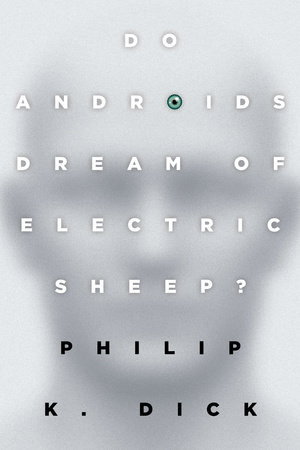
- Title: Do Androids Dream of Electric Sheep?
- Author: Philip K. Dick
- Published: 1968
- Publisher: Random House
- ISBN: 978-0-345-40447-3
You may be more familiar with the story through the movie “Blade Runner” than Philip K. Dick’s original novel. The setting is another apocalyptic, post-atomic world war Earth, where most life forms are extinct, and most humans have migrated to other planets. The film focuses more on the existential question — the living vs. the machine and life vs. mere automata. In contrast, the book follows two axes: the meaning of being alive (humans vs. androids) and the obsession with living creatures as a symbol of social status.
It is not uncommon for people to be obsessed with objects or symbols beyond their use-values, such as luxury goods, houses, cars, or even job titles. Once an object becomes a symbol of your social status or cultural taste, it starts to have a different type of use-value, especially from a psychological perspective. The life goal of Rick Deckard, the protagonist, seems to be owning a real, live animal rather than a fake electric one. He needs the assurance of being somebody or being a part of society by owning and displaying the common symbolic object of the society.
The main theme of the story, especially in the movie adaptation, is the meaning of being alive. In an extreme materialist view, a human being is merely a collection of chemicals. What if we can make androids that can think and act just like humans? Do we, as human beings, possess souls or divine seeds that make our existence unique in the universe? We have asked and tried to answer these existential questions, and they have turned into moral questions. We are not seeking simple answers. Rather, amid rapid technological progress, we are in the process of expanding or reconstructing our conceptual boundaries. This philosophical and intellectual capacity might distinguish human beings from other life forms.
The keyword is “empathy“, which distinguishes human beings from androids. Only increased empathy and live pets can fill the existential void. Ironically, people need to use the “empathy box,” which links them to a virtual reality of collective suffering, to boost their empathy and prove their existence.
It is interesting to note that I am writing this article in the mid-2020s, a time of an AI explosion. We are experiencing a conceptual shift regarding what is more important and what is truly essential to us.


