
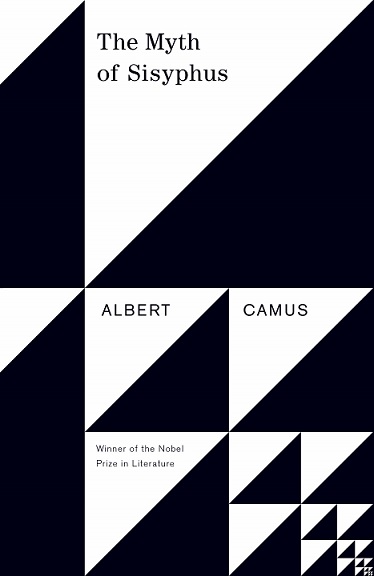
- Title: The Myth of Sisyphus (Le Mythe de Sisyphe)
- Author: Albert Camus
- Published: 1955
- Publisher: Vintage International (1991)
- ISBN-10: 0679733736
- ISBN-13: 978-0-679-73373-7
In this essay, Camus asserted that the fundamental question of philosophy is suicide – specifically, whether life is worth living or not.
The philosophy of the Absurd
The starting point is the feelings of being absurd. The absurdity of life has two faces:
- Your life is absurd, and there is no meaning in life.
- This lack of essence (fate) ensures the freedom of choice and action. We are not destined for anything.
Camus’s philosophy of the Absurd examines the conflict between humanity’s desire to find “inherent meaning” or “essence” in life and the “unreasonable silence” of a meaningless world.
Reason plays an important role here. Reflection on life lets you discover the absurdity of life continuously. We are, in a way, doomed. However, this reason also lets you revolt against the absurdity. Therefore, consciousness is both a blessing and a curse.
The Metaphor
In Greek mythology, Sisyphus was the clever king of Ephyra (Corinth). He repeatedly outsmarted and angered the gods. In the end, he was condemned to an eternal punishment. Camus uses Sisyphus as an “absurd hero”, whose endless punishment represents repetitive, everyday human life.
Insight
Camus insisted that suicide is not the answer to a meaningless life; rather, it is an escape from the reality. He calls on us to confront the absurd (revolt) courageously.
There is another type of suicide; “philosophical suicide” (often manifested as hope). Hope, in this context, means religious salvation or bad faith; it is an attempt to negate life’s absurdity with nostalgia, romanticism, and association with the divine. The hope of another life is the trickery of those who live not for life itself, but for some ideas.


